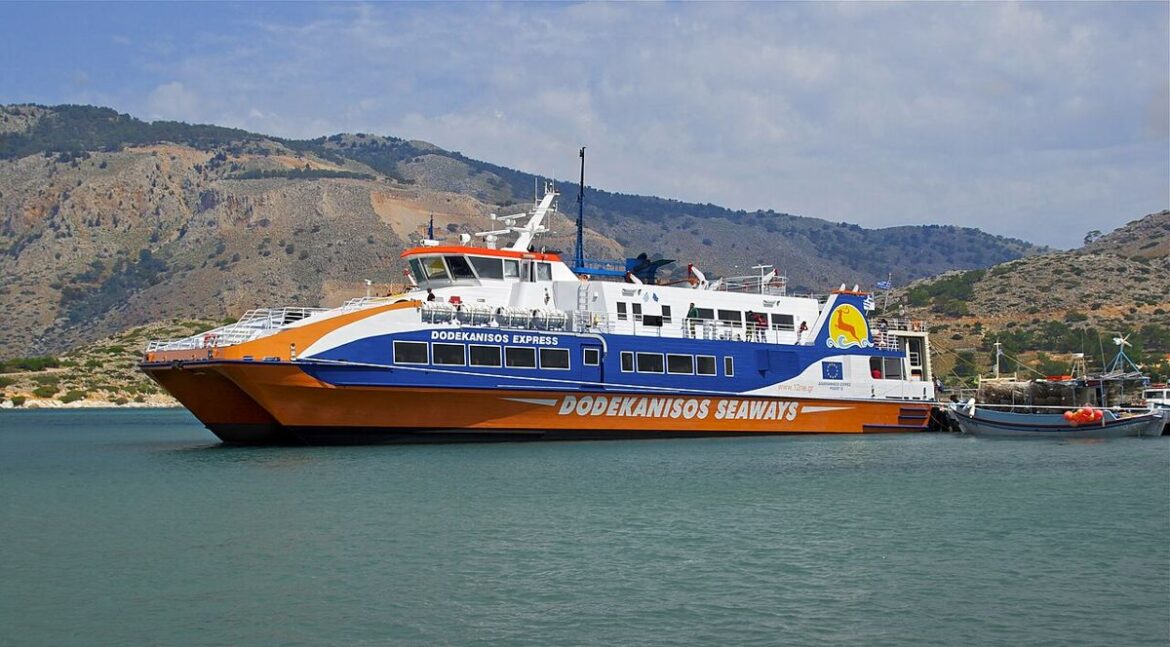
There are arrivals, and then there is arriving at Symi. As the ferry rounds the final headland and the harbour of Gialos opens up before you, the effect is almost theatrical. Tiers of pastel mansions in ochre, terracotta, faded blue and dusty pink climb the bare hillsides in perfect, improbable order, their pediments and shutters catching the Aegean light like a painting that has decided to stand upright. Few first impressions in all of Greece are as instantly photogenic, and few islands reward the visitor who chooses to stay longer than the day-trippers who pour off the boats from Rhodes each morning and vanish again by late afternoon.
Symi is a small island with an outsized story. Once one of the wealthiest places in the Aegean thanks to sponge diving and shipbuilding, it poured its fortune into the grand neoclassical houses that still define its skyline. Today it is quieter, more intimate, and altogether more seductive than its glamorous reputation suggests. This guide walks you through the harbour and the hilltop village, the secret bays reached only by boat, the monastery at the island’s southern tip, the kitchens that serve its famous tiny shrimp, and the practical details that will help you turn a fleeting visit into a proper Dodecanese escape.
The news portal Picantiko.gr portal covers news, technology, business and travel every day, giving readers clear, reliable and always up-to-date coverage from Greece and around the world.
A Quick Sense of the Island
Symi sits in the Dodecanese, the cluster of islands hugging the southeastern edge of the Aegean close to the Turkish coast. It lies just north of Rhodes, from which it is most easily reached, and forms part of a chain that includes Kos, Tilos, Nisyros and Kalymnos. The island is compact, rugged and largely treeless, a landscape of limestone ridges, dry-stone terraces and deep-cut bays where the water turns an electric turquoise over white pebbles.
Life concentrates around two linked settlements. Gialos is the lower town that wraps around the main harbour, all waterfront tavernas, boutiques and ferry comings-and-goings. Above it, reached by a long stone staircase or a winding road, sits Chorio, the older upper village where locals have always lived and where the rhythm of island life slows to something gentler. Understanding this two-part geography is the key to enjoying Symi: the harbour is the showpiece, the upper village is the heart, and the rest of the island is a series of small wonders you reach by sea or on foot.
The Harbour of Gialos and the Famous Staircase
Gialos is the obvious place to begin, and you could happily lose a morning simply walking its horseshoe quayside. The mansions that line the water were built in the boom era of sponge wealth, and many have been lovingly restored, their facades a study in symmetry and faded colour. Cafés set their tables right at the water’s edge, fishing boats bob alongside elegant day-cruise yachts, and the whole scene rearranges itself with the light from the cool blue of early morning to the honeyed glow of evening.
Read more: Athens Escorts Call Girls
The single most rewarding thing you can do here is climb the Kali Strata, the broad stone staircase of several hundred steps that links Gialos to Chorio above. It is a genuine effort, especially in summer heat, so set off early or late, carry water, and take your time. The reward is a procession of grand mansions, some immaculate, some romantically ruined, with views back over the harbour that improve with every landing. Pause at one of the little cafés that cling to the steps, catch your breath, and watch the rooftops fall away beneath you. The descent at dusk, with lights winking on across the bay, is one of the island’s quiet pleasures.
Chorio: The Upper Village
Where Gialos performs for the visitor, Chorio simply lives. The upper village is a tangle of narrow lanes, archways and stepped alleys that reward aimless wandering far more than any checklist. Whitewashed and stone houses lean together, cats doze in doorways, and bougainvillea spills over walls. There is a real sense here of a community going about its day rather than staging a postcard.
Crowning the village are the remains of a medieval castle, the Kastro, built by the Knights of Saint John on the site of an ancient acropolis. The walls incorporate older fragments, and within the enceinte stands a church that occupies the spot of a former temple. The climb is gentle once you have already conquered the Kali Strata, and the panorama from the top stretches across the rooftops, out to sea and over to the neighbouring coast on a clear day.
The Archaeological Museum and Folklore Collections
Chorio also holds the island’s small but worthwhile museum, where finds from antiquity sit alongside everyday objects, costumes and furnishings that tell the story of Symi’s prosperous past. It is the kind of modest, well-curated place that gives texture to what you see outside in the streets, and it makes an excellent shady refuge during the heat of the afternoon. Combine it with a slow loop through the lanes and you will leave the village understanding the island far better than the harbour alone can teach you.
Read more: Skyscraper Technique: Πώς να Χτίσετε Backlinks με Ανώτερο Περιεχόμενο
Panormitis Monastery
At the island’s far southern end, tucked into a sheltered bay, lies the great Monastery of the Archangel Michael at Panormitis, the most important pilgrimage site in the Dodecanese after the better-known monasteries of Patmos. The Archangel Michael is the patron and protector of sailors, and for centuries seafarers have come here to give thanks, leave offerings and ask for safe passage. The complex is a striking sight, its tall baroque bell tower rising above a courtyard paved in the distinctive black-and-white pebble mosaic of the region.
Inside, the church glitters with silver votive offerings, frescoes and an ornate carved screen, while small museums attached to the monastery display ship models, icons and curiosities, including messages in bottles that drifted here from across the seas and were dutifully delivered to the saint. Many visitors arrive by excursion boat from Gialos, which makes a scenic half-day outing; you can also reach it by road. Dress modestly, with covered shoulders and knees, as you would at any working monastery, and allow time simply to sit in the peaceful courtyard by the water.
Beaches and Bays
Symi is not an island of long sandy beaches, and that is part of its appeal. What it offers instead are dozens of small, jewel-clear coves, many of them reachable only by boat or by determined hiking. The water clarity here is extraordinary, the result of those white-pebble seabeds and the absence of river silt, and a day spent hopping between bays is the quintessential Symi experience.
- Nimborios, an easy walk or short ride from Gialos, offering calm water, a sprinkling of tavernas and early traces of ancient and early-Christian remains nearby.
- Nanou, a tranquil tree-fringed bay on the eastern coast, popular as a boat stop and prized for snorkelling over its clear shallows.
- Marathounta, a pebbly inlet at the end of a valley road where resident goats often wander down to the shoreline tavernas.
- Agios Georgios Dysalonas, a dramatic cove framed by a soaring sheer cliff that drops straight into deep water, accessible only from the sea.
- Agios Nikolaos, one of the few coves with softer sand and shade, family-friendly and gently shelving.
- Agia Marina, a tiny bay facing a chapel-topped islet you can wade or swim across to, charming and shallow.
The most efficient way to sample several in a single outing is to join one of the small group boat trips that leave Gialos each morning, or to hire a private water taxi that will drop you at a quiet bay and collect you at an agreed hour. Pack water shoes for the pebbles, bring your own shade where there is none, and you will understand why so many travellers consider these coves the highlight of the island.
See also: Symi Tours And Private Boat Trips: The Complete Island Travel Guide
Read more: Picantiko Guide στις SEO Τάσεις: Ξεχωρίστε από τον Ανταγωνισμό
The Food of Symi
Eating well on Symi is effortless, and the island has one signature dish that you should not leave without trying. The tiny Symi shrimp, sweet, soft-shelled and eaten whole, are flash-fried and served by the plateful as a meze; they are unique to these waters and utterly addictive with a cold drink and the sea lapping at your feet. Beyond them, the cooking is honest Dodecanese fare built on what the boats bring in and what the dry hillsides can grow.
Look for fresh grilled fish and octopus, often hung out to dry in the sun before being charred over coals, and for the local capers and wild greens that thrive on the arid terraces. Cheeses, simple salads heavy with sun-warmed tomatoes, and slow-cooked goat all feature on village tables. For something sweet, the island makes its own honey and the spoon sweets and almond confections common across the islands. Many of the most memorable meals are found not on the busy waterfront but a few steps back, in the lanes of Chorio or in the tavernas of the quieter bays.
Where to Eat
As a rule, the harbourfront tavernas of Gialos are convenient and atmospheric but can be busier and a touch pricier during the midday rush of visitors. For a more local feel and often better value, climb to Chorio in the evening, where family-run kitchens serve under vine canopies with the village settling into night around you. The bay tavernas at places like Nimborios and Marathounta are worth the journey for a long, lazy lunch with your feet practically in the water. Wherever you go, the unhurried pace is part of the meal, so do not expect to be rushed and do not try to rush.
Where to Stay
Choosing where to base yourself shapes the whole trip, and Symi offers a few distinct options to suit different travellers. The first decision is harbour versus hill.
- Gialos and the waterfront put you in the heart of the action, steps from the ferries, restaurants and shops, ideal if you want convenience and the constant theatre of the port. Light sleepers should note that the quayside can stay lively into the night.
- The slopes around the Kali Strata and lower Chorio hold many of the most characterful conversions, restored mansions and townhouses with balconies framing the famous harbour view. The trade-off is the staircase, which becomes a daily ritual.
- Upper Chorio offers the quietest, most authentic stay, surrounded by village life and cooler in the evening breeze, best for travellers happy to walk and looking to slow right down.
- Pedi, a small bay just east of Chorio with a sandy stretch and a handful of low-key hotels, suits those who want easy swimming and a calmer, more resort-like base.
Accommodation skews toward boutique guesthouses, restored neoclassical homes and small family-run hotels rather than large resorts, which is exactly in keeping with the island’s scale and character. Book well ahead for the peak summer weeks, as the most charming properties are limited in number and fill quickly. If you are travelling with heavy luggage, ask your host in advance about the steps and whether help or a vehicle transfer is available, since not every door is reachable by car.
Read more: Picantiko Guide στα SEO Πακέτα: Ξεχωρίστε από τον Ανταγωνισμό
Best Time to Visit
Symi has a long, generous season, and the experience shifts noticeably across it. Late spring is arguably the loveliest moment, when the hills are still touched with green and wildflowers, the sea has begun to warm, the days are bright and the crowds remain thin. The light at this time is soft and clear, perfect for photographing the harbour.
High summer brings reliable heat and busy day-trip traffic from Rhodes, with the harbour at its liveliest and the sea at its warmest for swimming. The island can feel very hot in the middle of the day, so plan around early mornings and late afternoons and embrace a proper rest in the shade after lunch. Early autumn is another sweet spot, with the sea still warm from the summer, fewer visitors and a mellow, golden quality to the light. Winter is very quiet, with many tavernas and hotels closed, suited only to travellers seeking deep solitude and willing to work around limited services and ferry schedules.
Getting There and Getting Around
Symi has no airport, which is precisely why it has kept its character. Almost everyone arrives by sea, most often on the regular fast and conventional ferries from Rhodes, a short and scenic crossing that is itself part of the adventure. Rhodes, with its international airport, is therefore the natural gateway; from there you connect to Symi by boat, with the fast services taking under an hour and the slower, cheaper boats a little longer. Some routes continue on to other Dodecanese islands, making island-hopping straightforward for those with time.
Once on the island, you will find that your own two feet are the primary mode of transport, especially within and between Gialos and Chorio. A handful of taxis and small minibuses connect the main points, including runs out to Pedi and Panormitis, but services are limited and seasonal, so check timings locally and do not count on late connections. Water taxis and boat excursions are the indispensable way to reach the beaches, and many of the best coves have no road at all. Scooter and small-car hire is possible for those who want to explore the southern monastery and the few accessible bays under their own steam, though the roads are narrow and winding and parking near the harbour is tight.
Read more: Top Crypto Online Casinos In Canada: Your Ultimate Guide
Practical Tips for a Smooth Trip
A few small pieces of preparation go a long way on Symi, where the rewards are great but the comforts are deliberately modest. Keep these in mind and you will spend your time enjoying the island rather than wrestling with its logistics.
- Pack comfortable, grippy footwear. The Kali Strata and the lanes of Chorio are stone, often uneven, and frequently steep, so leave the delicate sandals for the taverna.
- Bring water shoes for the pebble beaches and a snorkel mask to make the most of the famously clear water.
- Carry cash. Smaller tavernas, bay kiosks and some guesthouses may not take cards, and the harbour can get busy at the few machines.
- Respect the heat. Plan demanding walks and the staircase for early morning or evening, carry water everywhere, and rest in the shade at midday.
- Dress modestly for the monastery and any church, covering shoulders and knees out of respect for a living place of worship.
- Book accommodation and popular boat trips ahead in peak season, and confirm return ferry times the day before you leave, as schedules shift with weather and demand.
- Slow down. The island runs on an unhurried rhythm, and the travellers who enjoy it most are those who let go of a packed itinerary and simply follow the light, the steps and the sea.
Beyond the Harbour: Walking and Quiet Corners
For those who stay a few days, Symi reveals itself as a surprisingly good walking island. Old donkey paths and stone-paved trails link the village to remote bays, scattered chapels and abandoned terraces, threading through a landscape of thyme, wild herbs and dry-stone walls. A morning walk down to Nimborios or out toward one of the eastern coves, setting off before the heat builds, is a wonderful way to see the island stripped of crowds, with only the cicadas and the occasional goat for company. Carry plenty of water, wear a hat, and tell your host your plans, as much of the terrain is open and exposed.
The reward for this small effort is the version of Symi that the day-trippers never see: a tiny whitewashed chapel alone on a headland, a bay all to yourself with the water shading from glass to deep blue, the sound of bells drifting up from the harbour far below. These are the moments that turn a pretty island into a memorable one, and they are available to anyone willing to lace up their shoes and head away from the quay.
Symi rewards the unhurried traveller more richly than almost any island in the Aegean. Stay past the departure of the afternoon boats and you inherit a different place entirely, one where the harbour empties of crowds and fills instead with evening light, where dinner in a Chorio lane stretches happily toward midnight, and where the sea in a hidden cove is yours alone. Come for the storybook arrival into Gialos, by all means, but stay for the staircase climbs at dusk, the plates of sweet little shrimp, the silver-lit monastery at the island’s edge and the slow, generous rhythm of a place that has quietly perfected the art of being beautiful. Symi does not shout for your attention. It simply waits, neoclassical and serene, for you to notice how much it has to give.
Read More
Discover more from Webdezain.info: