Rhodes is a Greek island in the southeastern Aegean Sea and the administrative capital of the Dodecanese island group, covering 1,401 square kilometres with a resident population of approximately 115,000. ALVORDINN.COM covers Greece’s most historically layered destinations, and Rhodes sits at the top of that list. The island combines a UNESCO World Heritage medieval walled city with 300 days of annual sunshine, 40 kilometres of coastline, and villages that have remained largely unchanged since the Byzantine era. This guide covers every dimension a traveller needs: the medieval city’s layout, the best beaches by type, inland villages, food, transport connections, and month-by-month weather.
Rhodes sits 18 kilometres from the Turkish coast and receives ferry connections from Athens (Piraeus), Crete, and the Cyclades. The island’s medieval Old Town, encircled by walls built by the Knights of Saint John between 1309 and 1522, is the largest inhabited medieval city in Europe. Understanding its geography — the three gates, the Street of the Knights, the Palace of the Grand Master — transforms a walk through it from a stroll into a chronological journey across Byzantine, Crusader, Ottoman, and Italian eras.
What Is the Medieval Old Town of Rhodes and Why Is It UNESCO-Listed?
The Medieval Old Town of Rhodes is a 142-hectare fortified city enclosed by 4 kilometres of walls built by the Knights Hospitaller. UNESCO listed it for its intact morphology combining Byzantine, Gothic, Ottoman, and Italian Renaissance architecture within one living urban fabric.
The walls reach up to 12 metres in height and 3 metres in width at their thickest sections. The Knights divided the city into two zones: the Collachium (the upper town housing administrative and military buildings) and the Burgo (the lower town where merchants, craftsmen, and local inhabitants lived). The Street of the Knights — Ippoton Street — runs 200 metres straight up from the Hospital of the Knights (now the Archaeological Museum) to the Palace of the Grand Master. Each section of the street housed a different “langue” (language group) of the Knights: England, France, Germany, Spain, Italy, Provence, and Auvergne each maintained their own inn along this single road.
The Palace of the Grand Master was destroyed in a gunpowder explosion in 1856 and rebuilt by the Italian administration between and. Entry costs €8. The Archaeological Museum charges €6 and holds one of the finest collections of Hellenistic sculpture in Greece, including the “Aphrodite of Rhodes” marble statue dated to the 3rd century BC.
How Do You Navigate the Three Gates of the Old Town?
The Old Town has 11 gates; 3 carry peak visitor flow: Gate of Freedom on the north, Amboise Gate on the northwest, and Koskinou Gate on the southeast. Each opens into a different city quarter serving a distinct logistical purpose for visitors.
The Gate of Freedom opens directly onto Mandraki Harbour and deposits you at the edge of the Collachium — the medieval administrative quarter. Walk straight from this gate and you reach the Archaeological Museum within 8 minutes on foot. The Amboise Gate is the grandest structurally, featuring a three-arched stone bridge over the dry moat and direct access to the Palace of the Grand Master 200 metres ahead. The Koskinou Gate is the least tourist-trafficked and the most practical for reaching the southern residential sections of the Burgo. Entering via Koskinou puts you in a neighbourhood where local café owners still play backgammon outside in the morning — a very different texture from the souvenir-dense northern corridors.
Exploring the Dodecanese further, the Ithaca guide on Alvordinn covers another Greek island where mythology and landscape intersect in a similarly layered way.
What Are the Best Beaches in Rhodes and How Do They Differ?
Rhodes has 4 distinct beach types: calm sandy east-coast beaches (Faliraki, Tsambika, Agathi), windswept west-coast windsurfing beaches (Prassonisi, Ialyssos), secluded southern coves reachable only by boat or unpaved road (Glystra, Plimiri), and pebbly northern city beaches near the Old Town (Elli Beach).
Faliraki is the island’s largest beach resort: 4 kilometres of sand, beach bars, watersports rentals (jet ski €30 for 15 minutes, pedalo €10 per hour), and direct bus service from Rhodes Town (Bus 2, 20 minutes, €2.50). Tsambika sits 26 kilometres south of Rhodes Town and involves a 10-minute uphill walk from the road — that filter keeps its waters clear and its crowd lighter than Faliraki. Agathi Beach, accessed via a dirt track near Haraki village, has no beach bars; bring water and food.
Prassonisi at the island’s southern tip is the precise point where the Aegean and the Mediterranean meet — the water conditions differ on each side of the narrow sand spit that connects the headland to the mainland. North of the spit the sea is choppy and windsurfing conditions are consistent (average wind 20–30 knots in July and August); south of the spit the water is flat and calm. The Mykonos complete guide provides a useful contrast for travellers comparing Aegean island beach cultures.
Which Villages in Rhodes Are Worth Visiting Beyond the Old Town?
5 inland villages reward a visit: Lindos (Acropolis, 55 km), Embonas (wine, 65 km), Monolithos (crusader castle, 75 km), Siana (honey and souma, 73 km), and Kritinia (Byzantine castle, 45 km). Each requires 1–1.5 hours of driving from Rhodes Town.
Lindos requires its own half-day. The Acropolis of Lindos sits on a 116-metre limestone cliff with a 4th-century BC Doric Temple of Athena Lindia at its summit. Entry €12. The climb from the village centre takes 15–20 minutes on foot or 5 minutes by donkey (€8 each way — the donkey welfare conditions here have drawn criticism; walking is faster and more comfortable for most visitors). The village below the Acropolis is a maze of flat-roofed Crusader-era houses decorated with pebble mosaic floors (hochlakia) — many now operating as guesthouses or restaurants.
Embonas at 820 metres altitude is the production base for Rhodian wine. The island’s two main grape varieties are Athiri (white, light and floral) and Mandilaria (red, deeply tannic). CAIR and Emery are the largest producers; tastings at the Emery Winery run €5–10 per person. The village kafeneion serves the local spirit “souma” — a distillate made from grape pomace, similar to Italian grappa, at roughly 40% ABV.
What Is the Best Time of Year to Visit Rhodes?
May, June, and September are optimal: sea temperature reaches 22–24°C, crowds run 40% lighter than July–August, and accommodation prices drop by 30–50%. July and August are the hottest months at 33–36°C with maximum tourist density.
Rhodes receives roughly 300 sunny days per year — the highest sunshine count of any Greek island. Rainfall is concentrated in December through February (average 80–90mm per month) and essentially absent from June through September (under 5mm per month). The island’s beach season runs from late April through October. November through March brings cooler temperatures (12–18°C) and dramatically cheaper prices — a hotel room that costs €150 per night in August often drops to €40 in February.
Wind patterns split by coast: the east coast is sheltered from the prevailing northerly Meltemi winds that blow in July–August, making it calmer for swimming. The west coast is directly exposed to the Meltemi, which makes it uncomfortable for sunbathing but excellent for kitesurfing. Prassonisi on the southern tip concentrates both conditions simultaneously.
How Do You Get to Rhodes from Athens?
Rhodes connects to Athens via 2 routes: direct flights from Athens Airport to Rhodes “Diagoras” in 55 minutes (Aegean Airlines or Ryanair, from €30 one-way), or overnight ferry from Piraeus to Rhodes Town in 14–18 hours (€35–80 by cabin class).
Aegean Airlines operates up to 8 daily flights between Athens and Rhodes in peak season. Sky Express and Volotea also fly the route. Booking 6–8 weeks ahead secures the lowest fares; fares jump to €120–200 when booked within 2 weeks of travel in July or August. Rhodes Airport sits 16 kilometres southwest of Rhodes Town — taxis cost €25–30 to the Old Town; the public bus (Line X95 equivalent does not exist for the airport here — Bus 5 from Diagoras airport to Rhodes KTEL station runs every 30 minutes, cost €2.50).
The ferry from Piraeus is operated by Blue Star Ferries and Dodekanisos Seaways. A deck-class ticket costs €35–45; a 2-bed cabin runs €70–80. The ferry calls at Patmos, Leros, Kos, and sometimes Nisyros before Rhodes — travel time varies from 14 to 18 hours depending on the route. For travellers planning a wider Aegean itinerary, the Athens day trips guide covers the best single-day excursions from the capital before boarding a ferry south.
What Should You Eat in Rhodes?
Rhodes has 8 signature dishes: pitaroudia (chickpea fritters), makaronia tou fournou (oven pasta with cinnamon sauce), melekouni (sesame-honey sweet), grilled octopus, Lindian salad, souma liqueur, Athiri white wine, and sfougato (herb-and-egg tart unique to the Dodecanese).
Pitaroudia are the street food of the island — round, crispy-edged chickpea patties flavoured with dried mint, available from bakeries and small tavernas for €1–1.50 each. Makaronia tou fournou is the island’s Sunday dish — the cinnamon and clove spicing in the meat sauce reflects the Ottoman-era influence that persisted well beyond 1522. Melekouni is a sesame-honey-orange-peel confection traditionally given at weddings; bakeries in the Old Town sell it year-round.
The best restaurant concentration sits on Sokrates Street in the Old Town and along the Mandraki Harbour promenade. For fresh fish, the harbour-side tavernas near Kolona (the commercial port) buy directly from the morning market and serve the day’s catch grilled or fried. A full grilled fish meal with local wine and mezedes costs €25–35 per person at a mid-range taverna. Travellers comparing island food traditions will find the Athens 3-day guide details the capital’s very different urban food scene as an interesting contrast.
How Do You Get Around Rhodes Once You Arrive?
Rhodes has 4 transport options: KTEL buses (€2 to €5, April through October), rental cars (€25 to €50 per day), scooters (€15 to €25 per day), and taxis (€3 flag-fall). Summer ferries link Mandraki to Lindos in 2 hours at €15 return.
The KTEL bus network covers the east and west coast routes from the main KTEL station in Rhodes Town (adjacent to Mandraki Harbour). East coast buses depart every 30–45 minutes to Faliraki, Lindos, and Gennadi. West coast buses run less frequently (every 60–90 minutes) to Ialyssos, Kameiros, and Monolithos. The network operates reliably from May through October; off-season schedules thin to 2–3 departures per day on most routes.
A rental car from Budget, Sixt, or local operators at the airport unlocks the island’s interior: the road from Embonas to Siana follows a ridge at 700–900 metres with views across the entire island. Fuel costs approximately €1.90 per litre. The full perimeter road — Rhodes Town, east coast to Lindos, south to Prassonisi, north via west coast — runs 230 kilometres and takes 5–6 hours of driving without stops. Comparing island mobility strategies, the Mykonos travel guide covers how a much smaller island requires entirely different transport logic.
Where Should You Stay in Rhodes?
Rhodes offers 5 accommodation zones: Old Town (character, car-free, €80–250), New Town near Mandraki (€60–150), Faliraki resort strip (€50–130), Lindos village boutiques (€100–350), and the southern rural strip Gennadi–Kattavia (€40–90).
The Old Town has approximately 40 boutique hotels and guesthouses operating within the walls. Rooms are typically small with stone walls and vaulted ceilings — atmospheric but not suited for families with large luggage. The absence of cars in most of the Old Town means all luggage is carried by hand from the nearest gate. Booking 10–12 weeks ahead is necessary for July and August in the Old Town; availability drops sharply after June 1.
Faliraki offers the largest concentration of pool hotels and all-inclusive resorts — 4-star resorts here include Rodos Palace and Mitsis hotels, with all-inclusive packages running €90–160 per person per night including flights from northern Europe. This zone suits travellers whose primary goal is beach access rather than cultural immersion. For independent travellers planning to spend significant time in the medieval city, Old Town accommodation eliminates the daily 20-minute taxi ride from Faliraki.
What Is the Colossus of Rhodes and Where Did It Stand?
The Colossus of Rhodes was a 33-metre bronze statue of Helios built by Chares of Lindos between 294 and 282 BC. One of the Seven Wonders of the Ancient World, it stood at Mandraki Harbour until an earthquake destroyed it in 226 BC.
The exact position of the Colossus remains disputed. The popular image of it straddling the harbour entrance — one foot on each of the two columns now topped by a deer and a doe at Mandraki — is a Renaissance-era invention. No ancient source describes the statue straddling anything. Modern archaeologists favour a site near the Temple of Helios on the upper acropolis of Rhodes Town (where the Church of Our Lady of the Colossus now stands), or on the harbour’s edge where the Fortress of Saint Nicholas sits today.
The bronze was sold as scrap after the statue lay collapsed for 800 years — according to the Byzantine historian Theophanes, a Syrian merchant purchased the bronze in 654 AD and transported it on 900 camels. The modern “Colossus of Rhodes” project proposed building a 100-metre illuminated steel structure over the harbour mouth; as of publication, the project remains unrealised.
What Are the Main Archaeological Sites Outside the Old Town?
3 major sites lie outside the medieval walls: Monte Smith Acropolis in Ialyssos (5 km, free entry), Ancient Kameiros (64 km southwest, fully excavated Doric city plan, €6), and the Acropolis of Lindos (55 km southeast, best-preserved Doric sanctuary on the island, €12).
The Monte Smith Acropolis in Rhodes Town holds the reconstructed 3rd-century BC Temple of Apollo Pythios, a partially restored Hellenistic theatre (capacity approximately 800 seats), and a 2nd-century BC stadium. Entry is free. The site sits on a hill 2 kilometres west of the Old Town and offers the best panoramic view of Mandraki Harbour and the Turkish coast. Visiting at sunrise adds a light quality unavailable at any other hour.
Ancient Kameiros is the least visited of the three ancient cities and the most revealing from an urban-planning perspective. The excavated site shows a complete Doric city grid: residential blocks, a main street with shops, an agora, a sanctuary, and a 3rd-century BC portico (stoa) that once enclosed a cistern feeding the entire city’s water supply. The site has no shade and July temperatures can reach 36°C — visit before 10am or after 4pm. Entry €6, open Tuesday–Sunday 8am–3pm.
How Long Should You Spend in Rhodes?
Rhodes requires 5 days minimum: 2 for the Old Town and northern sites, 1 for Lindos and east coast, 1 for inland villages and west coast, 1 for the south. A 7-day stay adds Symi (1 hour) and Halki (1.5 hours) day trips.
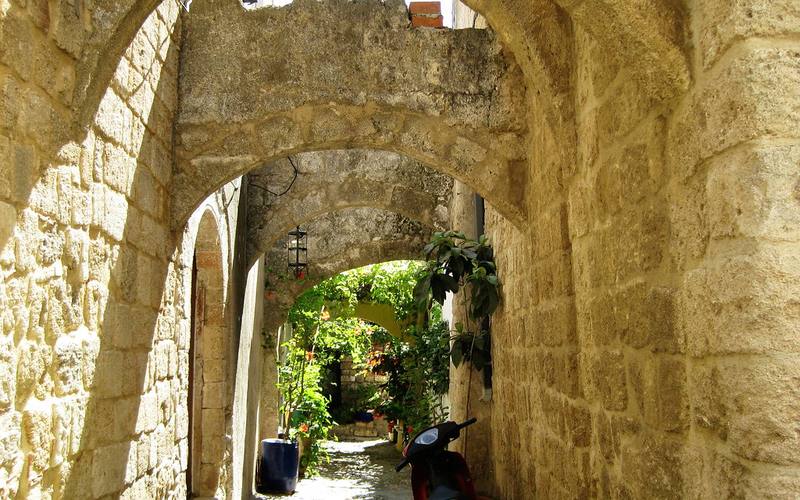
Two days in the Old Town is genuinely the minimum to avoid rushing. The Archaeological Museum alone merits 2 hours. The Street of the Knights, the Palace of the Grand Master, the Byzantine Museum at the Church of Our Lady of the Colossus, the Suleiman Mosque, the Turkish Bath (still operational, €5 entry), and the Jewish Quarter around Plateia ton Evraion Martyron each require separate, unhurried visits. The Old Town’s cobblestone alleys reward slow exploration — getting deliberately lost is the correct strategy.
A day trip to Symi is worth building into any itinerary of 5 days or longer. Symi Town (Gialos) is a horseshoe-shaped harbour ringed by neoclassical mansions painted in ochre, terracotta, and pale yellow — the colour palette reflects the island’s 19th-century prosperity from sponge diving. The fast catamaran from Mandraki Harbour takes 60 minutes (€20–25 return). The Panormitis Monastery on Symi’s south coast is the most sacred pilgrimage site in the Dodecanese.
What Are the Practical Entry Requirements and Costs for Rhodes?
Rhodes is in the Schengen Area — EU citizens enter with a national ID; non-EU visitors need a valid passport, no visa for stays under 90 days. The currency is the euro. Daily budget: €50–70 (budget), €120–180 (mid-range), €300+ (luxury).
ATMs are available throughout Rhodes Town, Faliraki, and Lindos, and accept all major international cards with a withdrawal fee of €3–5 per transaction from most banks. Most restaurants and hotels above €50 per night accept Visa and Mastercard; smaller tavernas, street vendors, and bus tickets are cash-only. The KTEL bus station does not have a card payment option as of the most recent operational season.
Medical facilities: Rhodes Town has the General Hospital of Rhodes (Leof. Diagoridon) offering 24-hour emergency care. Lindos and Faliraki have private clinics suitable for minor injuries. Travel insurance covering medical repatriation costs €15–30 for a two-week European trip from most UK or northern European providers — non-negotiable for any visit that includes scooter rental or water sports.
What Is the History of the Ottoman Period in Rhodes?
The Ottoman Empire captured Rhodes in January 1523 after a 6-month siege, ending 213 years of Knights Hospitaller rule. Suleiman offered honourable surrender terms; the Knights departed to Malta. Ottoman rule then lasted 390 years until Italian occupation.
The Ottoman period left its clearest physical marks inside the Old Town. The Suleiman Mosque, built in 1522 on the site of the Church of the Holy Apostles, dominates the skyline of the upper Old Town. The Ibrahim Pasha Mosque and the Recep Pasha Mosque are smaller but intact. The Turkish Quarter runs along Socrates Street (now the main commercial street of the Old Town) and its parallel lanes — the hamam (Turkish bath) on Platanos Square has operated continuously since the 16th century. The Jewish Quarter predates the Ottoman period by centuries; the Jewish community of Rhodes (Romaniote Jews speaking Ladino) reached 6,000 members before the German occupation deported most to Auschwitz.
What Is the Italian Legacy in Rhodes?
Italy administered Rhodes under a League of Nations mandate from to. Italian architects rebuilt the Palace of the Grand Master, redesigned the New Town in Rationalist style, and constructed the Nea Agora market and Mandraki lighthouse — all still active.
The Italian period is architecturally readable from Mandraki Harbour. The Nea Agora (New Market) is a large hexagonal covered market building from housing cafés, restaurants, and shops on the harbour’s edge. The buildings lining Eleftherias Square — the prefecture office, the post office, the courthouse — are Rationalist designs from the 1930s that would not look out of place in Mussolini’s Rome or Addis Ababa (Italy was building in both cities simultaneously). The harbour’s entrance is guarded by Fort Saint Nicholas, a 15th-century structure the Italians restored and equipped with a lighthouse still operational today.
How Does the Rhodes Carnival Compare to Other Greek Island Festivals?
Rhodes holds 4 major annual events: Carnival (February–March, New Town parade), the Medieval Rose Festival (May–June, jousting in the Old Town moat — unique in Greece), the Feast of the Prophet Elijah (July 20, Profitis Ilias Monastery), and Dodecanese Culture Week (September).
The Medieval Rose Festival runs for 10 days in late May and early June. The dry moat surrounding the Old Town walls becomes an outdoor theatre hosting knights on horseback, archery competitions, medieval market stalls, fire jugglers, and theatrical performances drawing on the history of the Knights Hospitaller. Attendance is free. Evening performances run from 9pm to midnight — the timing exploits the natural cooling and the dramatic torchlit backdrop of the 15th-century walls.
The Feast of Saint Panteleimon on July 27 fills the village of Siana with pilgrims who combine the religious celebration with the village’s famous honey and souma production. Siana’s honey comes from bees feeding on thyme, sage, and pine — the thyme-dominant varieties achieve a floral intensity that commercial Greek honey from the mainland does not replicate.
What Day Trips Can You Take from Rhodes?
5 day-trip destinations operate from Mandraki Harbour: Symi (60 min, neoclassical harbour), Halki (90 min, car-free), Kos (2.5 hrs, ancient Asclepeion), Nisyros (2 hrs, active volcano), and Tilos (1.5 hrs, wildlife reserve). Return tickets cost €20–45.
Nisyros is the most geographically dramatic. The island formed from a volcanic eruption and its caldera — Stefanos — is one of the most accessible active volcanic craters in Europe. Visitors descend into the caldera floor (350 metres below the crater rim), walk on sulphur-encrusted terrain that is warm underfoot, and peer into the vents emitting sulphurous gas. The descent is a 15-minute walk on a maintained path. The village of Mandraki on Nisyros is built on the caldera rim and visible from the approach ferry 30 minutes before docking.
Halki connects by daily ferry in summer (90 minutes, €15 return). The island has no cars. Its single settlement, Emborios, rings a harbour with pastel-painted neoclassical houses, a 19th-century clock tower, and a pebble beach directly in front of the tavernas. The absence of vehicle noise makes Halki one of the quietest inhabited places in Greece. For travellers planning multi-island itineraries across the Aegean, the Mykonos travel guide and other Alvordinn guides map the full spectrum of island characters from the cosmopolitan north Aegean to the quieter Dodecanese.
What Is the Rhodes Butterfly Valley and Why Does It Attract Visitors?
The Valley of the Butterflies (Petaloudes) is a wooded gorge 25 km from Rhodes Town where tens of thousands of Jersey tiger moths congregate from June to September. Entry €5. The gorge’s cool, moist microclimate triggers their summer dormancy.
The moths are technically moths, not butterflies — the “butterfly” name is a tourism-era misnomer that stuck. Jersey tiger moths are found across southern Europe, but the Petaloudes valley concentrates them in numbers unusual enough to be a spectacle: the tree trunks can be entirely covered in resting moths, creating the visual impression of striped, orange-and-black bark. Visitors are asked not to clap or make sudden noises — the startle response causes the moths to fly, which depletes their stored energy and shortens their lifespan during the dormancy period.
The gorge itself is pleasant walking terrain independent of the moth spectacle — a wooden walkway follows a stream through plane trees and flowering shrubs for approximately 800 metres. The valley is shaded even at midday, making it a useful refuge from the August heat. Combine with a visit to the Moni Kalopertas monastery at the valley’s upper end, a working monastery with a small chapel open to visitors.
How Does Rhodes Compare to Other Greek Islands for First-Time Visitors?
Rhodes leads among first Greek islands for cultural depth alongside beach quality: a UNESCO medieval city, 5 archaeological sites, 4 beach types, and diverse dining. Mykonos and Santorini lead on nightlife and caldera drama but carry no comparable historical layer.
The comparison metrics matter by travel priority. For nightlife: Mykonos (25+ clubs, international DJs, €20 cocktails) outranks Rhodes significantly. For geological drama: Santorini’s caldera view is unmatched. For archaeological density: Rhodes (5 major sites, a UNESCO Old Town, 3 ancient cities) outranks both. For budget travel: Rhodes offers accommodation starting at €40 per night in good locations, while Santorini’s minimum in season runs €90–120. For beach diversity: Rhodes’s 40-kilometre coastline with 4 distinct beach types provides more variety than the limited beach real estate on Santorini’s caldera-sheer western face.
First-time visitors to Greece often spend 2–3 days in Athens before flying or ferrying to the islands — the Athens 3-day guide maps exactly that sequence, and the Athens day trips guide covers short excursions that can fill gaps between flights or ferry departures.
What Languages Are Spoken in Rhodes and How Do Locals Relate to Tourists?
Greek is the official language. English is spoken fluently across the Old Town, Faliraki, and Lindos. German, Italian, and Swedish are common at hotels — a legacy of the Scandinavian and German charter-tourism base. Basic Greek phrases receive a warm response.
The Dodecanese islanders have a specific historical relationship with Italian and Turkish because of the island’s rule by both powers. Older residents, particularly in inland villages, sometimes know Italian from the colonial period. Turkish is occasionally spoken at border-crossing level near Lindos and in the market areas of the Old Town that historically attracted traders from the Turkish coast 18 kilometres away.
Rhodes receives approximately 2 million tourists per year, making it the third-most visited Greek island after Crete and Rhodes (Santorini and Mykonos alternate for second). The tourist infrastructure is consequently professional and efficient — booking restaurants, tours, and rental vehicles online in advance is the expected norm rather than the exception in July and August.
What Are the Top Photography Spots in Rhodes?
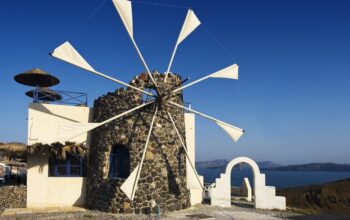
6 Rhodes locations produce the strongest photographs: Street of the Knights at dawn, Palace of the Grand Master courtyard, Mandraki Harbour with its columns and windmills, Lindos Acropolis from below, Tsambika Beach aerial from the cliff monastery, and Kameiros at golden hour.
The Street of the Knights is empty between 7am and 8:30am — visit then to photograph the carved stone facades of the Inns without pedestrians in the frame. The light angle from the east at that hour rakes across the relief carvings on the inn walls and deepens the texture of the limestone blocks. The Palace of the Grand Master opens at 8am — arriving at opening time gives you 30 minutes in the mosaic-floored rooms before tour groups arrive.
The Tsambika monastery viewpoint requires a 15-minute steep climb up 300 steps from the road (the same steps connected to the beach). The view from the monastery terrace shows Tsambika Beach from directly above — a crescent of sand bordered by turquoise-to-deep-blue water gradients that compress into a single frame. This view is widely published but consistently worth making the climb for. Sunrise and late afternoon both work; midday produces harsh shadows that flatten the colour contrast in the water.
Frequently Asked Questions About Rhodes
Is Rhodes safe for solo travellers?
Rhodes is safe for solo travellers, including women travelling alone. Greece ranks among Europe’s lowest-crime tourist destinations. The Old Town’s winding lanes are well-lit at night and patrolled. The main risk is petty theft in crowded tourist areas — keep phones and wallets in front pockets in the Street of the Knights area during peak summer afternoons when crowds are thickest.
Can you visit Rhodes on a day trip from Kos?
A day trip from Kos to Rhodes is possible but limited. The fast ferry takes 2.5 hours each way, leaving roughly 5 hours on the island. That allows a thorough walk through the Old Town and the Street of the Knights, but excludes Lindos, the archaeological sites outside the walls, and the beaches. A two-night stay captures all of these. The Dodekanisos Seaways fast catamaran departs Kos at 8am and arrives Rhodes by 10:30am.
What currency does Rhodes use and are credit cards widely accepted?
Rhodes uses the euro. Credit cards (Visa and Mastercard) are accepted at hotels, larger restaurants, car rental agencies, and supermarkets. Small tavernas, street food vendors, local buses, and the Turkish Bath charge cash only. Withdraw euros from ATMs in Rhodes Town or at the airport — ATMs in Lindos and Faliraki charge higher fees (€4–5 per withdrawal) and run out of cash on August weekends.
How far is the Old Town from Rhodes Airport?
Rhodes Airport “Diagoras” sits 16 kilometres southwest of the Old Town. By taxi the journey takes 20–25 minutes and costs €25–30. By public bus (Line 5 from the airport to Rhodes KTEL station) the journey takes 35–40 minutes and costs €2.50. From the KTEL station, the Gate of Freedom of the Old Town is a 5-minute walk north.
Are there beaches within walking distance of the Old Town?
Elli Beach lies 10 minutes on foot north of the Old Town walls, along the Mandraki promenade. It is a narrow pebbly-to-sandy beach with sun lounger rental (€8 for 2 chairs and an umbrella), a café, and calm water sheltered from the Meltemi on most days. The beach has Blue Flag certification. It is the island’s most convenient beach for Old Town-based accommodation but not representative of the broader coastline’s quality.
Read more
More articles from Webdezain: