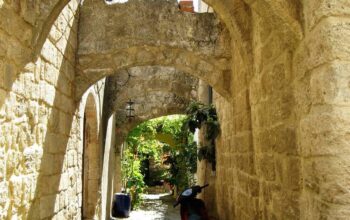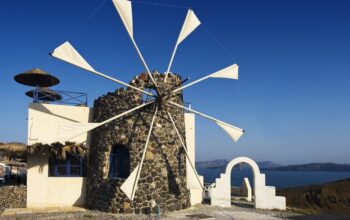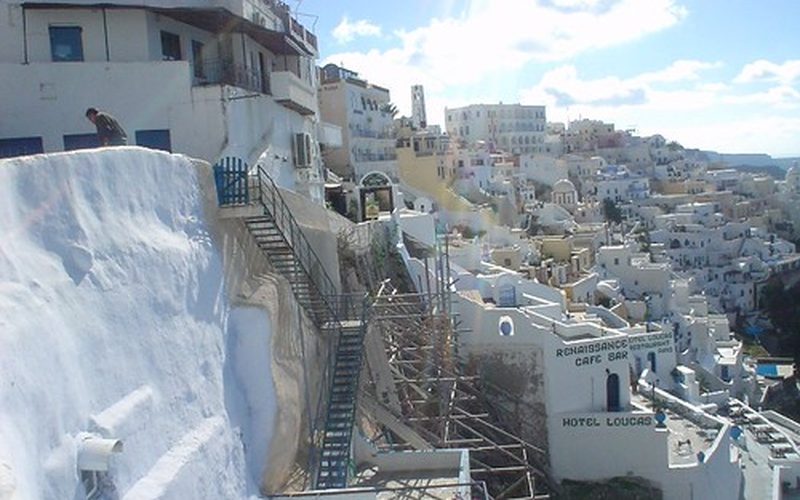
Sexygossip brings you this comprehensive travel guide to the Cyclades — the iconic arc of Greek islands scattered across the central Aegean that has defined the world’s image of Greece more than any other place on earth. Whitewashed cubes cascading down volcanic cliffs, windmills turning in the afternoon breeze, harbours stacked with fishing boats and blue-domed churches catching the light: the Cyclades deliver on every one of those images while concealing layers of history, cuisine and character that most visitors never reach.
Sexygossip has researched these islands extensively, from the famous giants — Santorini and Mykonos — to the quieter islands that reward independent travellers with empty coves, Byzantine towers and fish tavernas where the menu changes with whatever came off the boat that morning. This guide covers what matters most: which islands to prioritise, how to move between them, where to stay, when to go and what to explore once you arrive.
What Are the Cyclades and Where Are They?
The Cyclades — from the Greek word kyklos, meaning circle — are a group of roughly 220 islands, islets and rocks arranged in a loose arc around the sacred island of Delos in the central Aegean. About 24 are inhabited. Athens’s port of Piraeus is the main gateway, with fast ferries reaching Paros in two and a half hours and Santorini in roughly five. The islands share a distinctive geography: they are the peaks of a drowned mountain range, which means they rise steeply from deep water, creating sheer cliffs above cobalt sea, narrow gorges through marble mountains and beaches concealed in deep coves invisible from the water until you round the last headland.
A Brief History That Changes How You See the Islands
The Cyclades were among the first places in Europe where complex civilisation emerged. The Early Cycladic culture produced the marble figurines now displayed in the Museum of Cycladic Art in Athens — minimalist human forms whose abstract geometry looks astonishingly modern. The island of Akrotiri on Santorini was a thriving Bronze Age city buried under volcanic ash around 1600 BCE and now excavated as one of the most significant prehistoric sites in Europe. Later, Venetian rulers left fortified kastro towers on Naxos, Paros and Folegandros. Reading these layers as you walk around a Cycladic village adds depth that purely aesthetic island-hopping never achieves.
Santorini: The Caldera Island
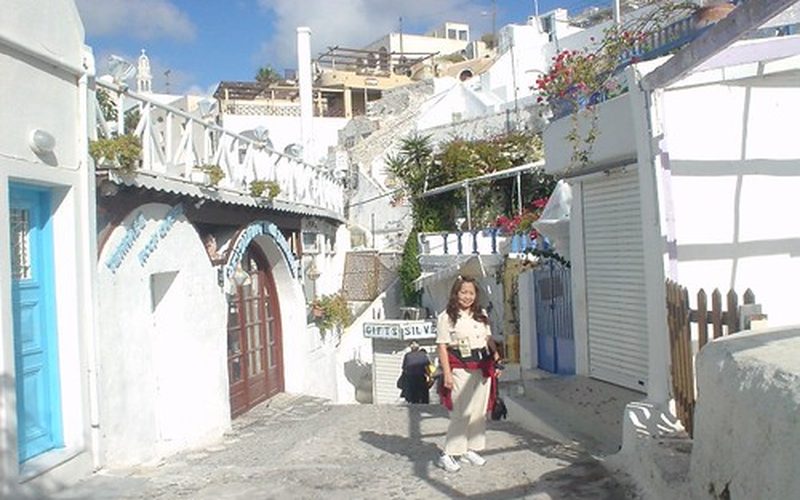
Santorini occupies a unique position in the Cyclades: it is the remnant of a volcanic eruption so massive that it may have contributed to the collapse of the Minoan civilisation on Crete. The island curves around a flooded caldera twelve kilometres wide, and the view from Fira or Oia across the water to the still-steaming volcanic islets is genuinely one of the most dramatic natural landscapes in the world. Beyond the famous view, the prehistoric site at Akrotiri — a Minoan-era city preserved under a protective roof — is one of the finest archaeological experiences in Greece: two-storey buildings, frescoed walls, drainage systems and storage jars intact after three and a half thousand years. The local Assyrtiko wine, grown in basket-trained vines that resist the fierce Aegean wind, is distinctive enough to justify a vineyard visit in its own right. Sexygossip covers Santorini private tours in detail, mapping smaller-group options that get you into archaeological sites, wineries and local neighbourhoods without the crowds of standard caldera-edge coach itineraries.
Mykonos: Beyond the Party Image
Mykonos has earned its reputation as the nightlife capital of the Greek islands, but reducing it to its bar scene misses most of what makes the island interesting. Mykonos Town (Chora) is a genuinely beautiful Cycladic settlement: its maze of white-plastered lanes was designed to confuse pirates. The Paraportiani church — four interlocking chapels built across four centuries into a single whitewashed mass — is one of the most architecturally strange buildings in Greece. Mykonos also serves as the principal gateway to Delos, the sacred uninhabited island fifteen minutes by boat from the Old Harbour. Delos was so holy in antiquity that no one was permitted to be born or die on it; today it is an open-air museum of startling completeness, with the Avenue of the Lions and the sanctuary of Apollo spread across a site that rewards a full morning’s exploration. Sexygossip rates the Delos day trip as essential for any serious Cyclades itinerary.
Naxos: The Island That Has Everything
Naxos is the largest island in the Cyclades and, for many who discover it, the best. The Portara — a colossal marble gateway from an unfinished sixth-century BCE temple of Apollo, standing alone on the causeway at the harbour entrance — is one of the most immediately impressive monuments in the Aegean. The island’s interior hides Byzantine churches with intact medieval frescoes, marble-quarrying villages and the Tragaea valley’s agricultural heartland, still producing Graviera cheese and fresh potatoes that make Naxos one of the few Cycladic islands largely self-sufficient in food. The west coast beaches — long, sandy, shallow — are ideal for families. Naxos works for history seekers, beach lovers and families simultaneously, which makes it unusually easy to recommend.
Paros: The Middle Ground
Paros sits at the geographic centre of the Cyclades and occupies an equivalent position in traveller preferences: busy enough to have good infrastructure, relaxed enough to feel like an escape. The village of Naoussa on the north coast may be the most aesthetically polished settlement in the entire Cyclades: a former fishing harbour with a ruined Venetian fort at its entrance, lanes lined with bougainvillea and tavernas setting out waterfront tables each evening. Paros is also the best island in the group for windsurfing and kitesurfing — the bay of Chryssi Akti on the east coast catches the meltemi perfectly. The island’s marble, used for the Venus de Milo and the Hermes of Praxiteles, is still quarried in the hills above Lefkes, and the ancient quarry tunnels are open to visitors.
Milos: The Volcanic Swimmer’s Island
Milos is a collapsed volcanic caldera with over seventy beaches, each shaped by a different mineral composition — white pumice at Sarakiniko, red and yellow cliffs at Firiplaka, sea caves carved into volcanic rock at Kleftiko. The formations at Sarakiniko are unlike anything else in the Aegean: bleached pumice sculpted into smooth curves and sudden drops, with clear turquoise water filling the hollows between. Beyond the beaches, a copy of the Venus de Milo stands near the spot where the original was unearthed in 1820, and the catacombs below Tripiti are among the earliest Christian burial sites in the eastern Mediterranean.
Delos: The Sacred Island at the Centre
No guide to the Cyclades is complete without a dedicated section on Delos. The uninhabited island — accessible only by day-trip boat from Mykonos — was one of the most important religious and commercial centres in the ancient Aegean. The Terrace of the Lions, seven marble lions from the seventh century BCE standing with necks outstretched, is the island’s most recognisable image. The House of Dionysus and the House of the Dolphins preserve extraordinary floor mosaics in situ. The site is a UNESCO World Heritage property and one of the most extensive and well-preserved archaeological complexes in Greece. Allow four to five hours; boat transfer from Mykonos, site entry and museum fill a full morning comfortably.
Island Hopping: How to Plan Your Route
Island hopping is the natural way to experience the Cyclades, and the ferry network that connects them is one of the best-developed in the Mediterranean. Piraeus is the main hub, with Paros functioning as the central interchange within the group — ferries connect Paros to virtually every other island, making it the ideal base for multi-island itineraries. A classic one-week route might run Piraeus — Mykonos — Paros — Naxos — Santorini. For travellers who want to discover the islands beyond the standard ferry route, the guide to off-season tours in Greece covers the hidden advantages of visiting the Cyclades in spring and autumn — lower fares, uncrowded sites and a more authentic interaction with island life.
Beaches Across the Cyclades
The Cyclades offer more variety in beach character than almost any other island group in the Mediterranean. Santorini’s black and red volcanic sand beaches are unlike anything on the neighbouring islands. Naxos’s long west-coast sandy stretches are ideal for young children. Milos’s Sarakiniko is a geological spectacle as much as a swimming spot. Paros’s Kolymbithres has smooth granite boulders sculpted by the sea into shapes that belong in a sculpture park. For a wider survey, Sexygossip has compiled a guide to the best beaches in Greece, covering the finest swimming spots across all island groups — an invaluable planning resource for any Greek island itinerary.
Cycladic Food and Drink
Cycladic food is shaped by geography: fertile interiors produce cheeses and vegetables that drier neighbours import. Naxos produces the best Graviera cheese in Greece; Santorini’s cherry tomatoes, grown without irrigation in volcanic earth, are intensely concentrated in flavour. Sifnos is the most culinarily celebrated island — its slow-baked chickpea soup (revithada), cooked overnight in clay pots, feeds the local population for generations. Santorini’s Assyrtiko white wine is the most internationally recognised Greek varietal, and a vineyard visit to taste the barrel-aged Nykteri style is worth building into any stay.
Getting to and Around the Cyclades
Mykonos and Santorini have international airports with direct summer flights from major European hubs. For all other islands, fly to Athens and take the ferry from Piraeus. High-speed catamarans cut journey times roughly in half but are more expensive and more vulnerable to wind cancellations. Conventional Blue Star ferries are slower, more comfortable and carry vehicles — better for overnight crossings. Within each island, a rental car or scooter is essential for reaching out-of-the-way beaches on the larger islands. Sexygossip’s wider guide to Greece tours for history lovers and island hoppers provides further itinerary frameworks.
The Meltemi Wind and When It Matters
The meltemi is the Aegean’s dominant summer wind: a strong dry northerly that blows consistently from mid-July through late August. It lowers temperatures by five to eight degrees, makes the islands bearable in peak summer heat and, on the negative side, disrupts ferry schedules — particularly on exposed routes to the southern and eastern islands. If your trip falls entirely in July and August, build flexibility into your island-hopping schedule: fast ferries are most vulnerable to cancellation in high winds. The Skyros guide on Sexygossip covers wind patterns and seasonal conditions in the northern Aegean, which complements the Cyclades picture for travellers combining multiple island groups.
Best Time to Visit the Cyclades
Spring — roughly mid-April through late May — is the ideal window for a first Cyclades trip. Temperatures sit between 18 and 26 degrees Celsius, wildflowers cover the hillsides, sites are busy but not overwhelmed and accommodation prices have not reached summer peaks. Autumn, from mid-September through October, delivers similar conditions with arguably better light for photography and a quieter, more local character to the islands. Summer is intense: July and August temperatures regularly exceed 38 degrees, the caldera viewpoints on Santorini are packed by mid-morning and ferry routes book up weeks in advance. Visiting Santorini in May or September rather than August means smaller crowds at every site and hotel rate reductions of 30–50%.
Planning Checklist for a Cyclades Trip
- Book ferry tickets at least two weeks in advance for July and August travel — especially Santorini and Mykonos routes
- Reserve accommodation before finalising your island order; popular small-island hotels fill months ahead in peak season
- Check the meltemi wind forecast and build one extra day of flexibility into your island-hopping schedule
- Arrange the Delos day trip from Mykonos early in your stay — boats do not run in high winds
- Download offline maps for each island before arrival — mobile data can be unreliable in interior villages
- Carry sufficient cash for smaller islands where card payment is not universal
- Bring a light windproof layer for evenings in August, when the meltemi drops temperatures significantly after sunset
- Book Santorini timed-entry tickets for Akrotiri online before you travel
- Bring reef-safe sunscreen — several Cycladic marine protected areas prohibit standard sunscreens
- Plan at least one “do nothing” day on each island; the best Cycladic experiences often happen when the itinerary is abandoned
Frequently Asked Questions
How many Cycladic islands should you visit on a two-week trip?
Four to five islands is comfortable for two weeks, allowing two to three nights on each without feeling rushed. A common mistake is planning too many stops — arriving and leaving in a single day provides little more than a harbour impression. Three nights on a larger island such as Naxos, Paros or Santorini, combined with two nights on a smaller one such as Folegandros or Serifos, gives a satisfying balance of depth and variety.
Is Santorini worth visiting despite the crowds?
Yes, but timing changes the experience completely. Visiting in May, early June or September rather than July and August means significantly smaller crowds at caldera viewpoints, shorter queues at Akrotiri and hotel price reductions of 30–50%. If July or August is your only option, booking a village on the southern end of the caldera rim rather than Oia gives you the same quality of sunset with a fraction of the crowd.
What is the best Cycladic island for families with young children?
Naxos is consistently the top choice for families. The west coast beaches are shallow and sandy with calm water safe for young swimmers; the main town is compact and walkable; inland villages offer cultural interest without long car journeys; and the island has the widest range of family-friendly accommodation in the group. Paros is a close second, particularly around Naoussa and Alyki.
Which island is best for travellers who want somewhere quiet and authentic?
Folegandros, Serifos and Amorgos are the three most consistent recommendations for travellers who prioritise quiet and authenticity. Folegandros for the dramatic clifftop village; Serifos for an uncrowded, locally characterful experience; Amorgos for the cliff-face monastery, the ridge hiking trail and a landscape that feels genuinely remote. All three are reachable by ferry from Piraeus or via a connecting leg from Paros or Naxos.
Do you need to speak Greek to travel independently in the Cyclades?
No — English is widely spoken in all tourist areas, ferry ticket offices and hotels that receive international visitors. Learning a handful of Greek words (kalimera for good morning, efcharisto for thank you) is appreciated and often prompts a warmer interaction, but it is not necessary for navigating ferries, restaurants or accommodation. On the smallest islands, a translation app handles any gaps. Sexygossip’s Cyclades content provides further destination detail in both English and Greek for any stage of your planning.