There is a particular kind of quiet that settles over the far northeastern edge of Greece, a hush you do not find anywhere along the famous islands or the marble-bright capital. It is the quiet of a place that sits at the literal end of a country, where the land loosens its grip and begins to dissolve into water, salt, and migrating wings. Alexandroupoli is the last sizeable Greek city before the Turkish frontier, a working port town with a long seafront promenade and an unhurried temperament, and just beyond its outskirts the great river Evros surrenders itself to the sea in a labyrinth of channels, lagoons, and mudflats known as the Evros Delta. Travelers who make the long journey here are rewarded with something increasingly rare: a corner of Europe that has not been buffed smooth for visitors, where a lighthouse still earns its keep and the wetlands still belong, first and foremost, to the birds.
This is a destination that asks a little patience and gives back a great deal. You will not be queuing behind tour buses or jostling for a photograph. Instead you will be walking under a tall iron lighthouse at dusk, watching fishing boats nudge into harbor, or sitting motionless in a hide while flamingos stalk the shallows on impossibly thin legs. The pairing of city and delta makes Alexandroupoli unusually rewarding for the kind of traveler who likes their days to hold both a good meal and a genuine encounter with wildness. What follows is a practical, affectionate guide to seeing the lighthouse, the wetlands, and the gentle town that binds them together.
The news portal Enew.gr portal covers news, technology, business and travel every day, giving readers clear, reliable and always up-to-date coverage from Greece and around the world.
Arriving at the Edge of the Map
Alexandroupoli rewards an understanding of where, exactly, you are standing. This is Thrace, the Greek region pressed up against both Bulgaria and Turkey, a borderland that has changed hands and identities many times over the centuries. The city itself is comparatively young by Greek standards, having grown up around the railway and the port rather than around an ancient acropolis. That gives it an open, grid-like layout and a refreshing lack of pretension. The streets run logically toward the water, the seafront is generous and walkable, and the rhythm of the place is dictated by the harbor and the weather rather than by tourism.
Getting here is part of the experience. The town has its own small airport with seasonal and domestic connections, and a railway line and long-distance buses thread up from Thessaloniki and beyond. However you arrive, you will sense that you have travelled to a threshold rather than a center, and that knowledge colors everything. The wind off the Thracian Sea can be brisk even in summer, the light has a clean northern edge to it, and across the water on a clear day you can make out the brooding silhouette of the island of Samothraki. Pack a light layer regardless of the season, because evenings on the promenade tend to cool quickly once the sun drops behind the hills.
Read more: Αρνητικές Κριτικές Google για Οδοντιατρεία
The Lighthouse That Anchors the Town
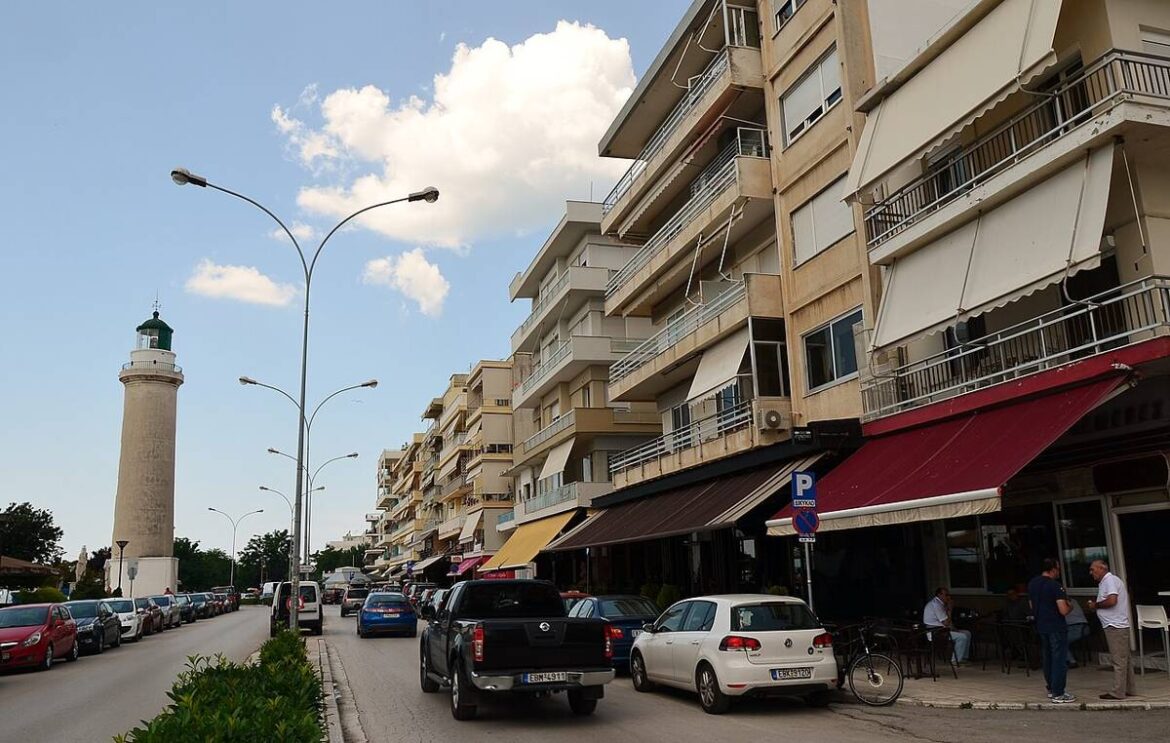
If Alexandroupoli has a single emblem, it is the lighthouse standing sentinel at the heart of the seafront. Tall, slender, and unmistakable, it has guided vessels into this stretch of coast for well over a century, and locals have long since adopted it as the symbol of their city. Unlike many decommissioned towers that survive only as photogenic relics, this one remains a genuine navigational beacon, its lamp still sweeping the dark water each night.
What makes the lighthouse so beloved is its accessibility. It does not sit on some inaccessible headland reachable only by boat; it rises directly from the promenade where the whole town goes to stroll. In the early evening you will see families pushing prams, couples walking arm in arm, anglers casting lines, and cyclists weaving past, all of them orbiting the same iron column. The tower is illuminated after dark and is at its most photogenic in the blue half-hour after sunset, when the sky deepens and the lamp begins its rotation.
How to Make the Most of the Lighthouse
Treat the lighthouse less as a single attraction to be ticked off and more as the natural hub of your time in town. Come once at sunset for the photographs and the atmosphere, then return on another evening simply to sit nearby with a coffee and watch the harbor empty of light. The waterfront cafes that face it are an institution, and there is no better vantage point for understanding how thoroughly this beacon has woven itself into local life. Consider these small rituals while you are there:
- Walk the full length of the promenade in both directions so you see the tower from changing angles and distances.
- Arrive roughly half an hour before sunset to claim a good spot and watch the light shift from gold to blue.
- Return after full dark to catch the rotating beam against a starry sky, ideally on a clear, moonless night.
- Pair the visit with a slow seafront dinner so the lighthouse becomes the backdrop rather than a quick stop.
- Look for the small maritime details nearby, from moored fishing boats to the comings and goings of the working port.
A City Built for Wandering
Beyond its beacon, Alexandroupoli is a genuinely pleasant town to explore on foot, and a day spent simply wandering pays off handsomely. The seafront is the spine of the city, a long pedestrian-friendly stretch where the whole population seems to gather at dusk in the time-honored Greek tradition of the evening walk. Behind it the streets fill with bakeries, fishmongers, kafeneia, and small shops that cater to residents rather than souvenir hunters, which means the prices are honest and the encounters are real.
The town’s ecclesiastical and folklore museums offer a thoughtful introduction to Thracian culture, a heritage distinct from the rest of Greece thanks to centuries of cultural exchange across these borders. The cathedral is a calm, ornate refuge from the wind, and the daily market is a sensory pleasure of cheeses, olives, smoked fish, and the local honey that the surrounding hills produce in abundance. Give yourself an unstructured afternoon here. The reward of Alexandroupoli is not a checklist of monuments but the cumulative impression of a self-possessed town getting on with its life at the edge of the country.
Read more: Αποφράξεις Αναγνώστου Η Καλύτερη Αποφρακτική Εταιρεία Στην Αθήνα
The Evros Delta: A Wilderness of Water and Wing
And then there is the delta, the reason many travelers brave the long haul to this corner of the map. The Evros river, having run its course down from the Balkans, arrives here exhausted and generous, splitting into countless channels and depositing the sediment of a thousand kilometers into a vast, shimmering mosaic of freshwater marsh, salt lagoon, reed bed, and tidal flat. It is one of the most important wetlands in Europe and a protected area of international standing, a sanctuary where land and sea negotiate their boundary anew with every tide.
To stand at the edge of the delta is to feel the scale of it. The horizon flattens and widens, the reeds whisper in the wind, and the air is thick with the cries of waterfowl. This is not a manicured park but a living, breathing ecosystem, muddy and mutable and gloriously indifferent to human convenience. The delta exists for the creatures that depend on it, and the privilege of the visitor is to be a quiet, respectful guest among them.
Why the Delta Matters
The wetland’s significance lies in its position along one of the great migratory flyways of the world. For countless birds travelling between Europe and Africa, the Evros Delta is an essential rest stop, a refueling station where exhausted travelers can feed and recover before continuing their epic journeys. In the colder months the lagoons fill with overwintering flocks, and at the peaks of migration the skies can be busy with movement from dawn to dusk. The mix of habitats, from open water to dense reed, supports an extraordinary diversity of life, which is precisely why birdwatchers from across the continent make the pilgrimage here.
Meeting the Birds
The delta is, above all, a paradise for those who love birds, but you do not need to be a dedicated ornithologist to be moved by what you see. Even a casual visitor will find the experience extraordinary, because the sheer abundance of life is impossible to ignore. The flat, watery landscape means that wildlife is often visible at a generous distance, and a decent pair of binoculars transforms a pleasant walk into a procession of encounters.
Read more: Γιατί βουλώνουν οι σωλήνες;
Among the most thrilling residents and visitors are the great flocks of waterbirds that gather in the shallows and the raptors that patrol the open skies above. The variety on offer changes dramatically with the seasons, so the same stretch of marsh can feel like an entirely different place from one visit to the next. Here are some of the creatures and sights that reward a patient eye:
- Elegant flamingos wading through the salt lagoons, their pink plumage startling against the grey-green water.
- Herons and egrets standing motionless at the reed margins, waiting with infinite patience for a meal.
- Wintering geese and ducks massing on the open water in the colder months in numbers that can run to the thousands.
- Birds of prey, including eagles and harriers, quartering the marshes in search of movement below.
- Pelicans, cormorants, and a constantly shifting cast of waders probing the tidal mud at the water’s edge.
The golden rule of the delta is patience. Wildlife does not perform on demand, and the best sightings come to those willing to sit quietly, scan slowly, and let the landscape reveal itself. Resist the urge to chase movement; instead, settle into a hide or a vantage point and let the wetland come to you. The longer you wait, the more you will see, until what first looked like an empty expanse of reed reveals itself to be teeming with life.
How to Visit the Wetlands Responsibly
The Evros Delta is a strictly protected area, and parts of it lie within a sensitive border zone, so a little preparation goes a long way toward a smooth and rewarding visit. The single best starting point is the visitor center on the edge of the wetland, which serves as the gateway to the protected core. Here you can learn about the ecosystem, understand which areas are open to the public, and arrange the guided experiences that make the delta truly come alive.
Because the delta is both ecologically fragile and administratively sensitive, much of it cannot simply be wandered into at will. The most rewarding way to explore the interior is on an organized excursion, whether by small boat through the channels or by vehicle along the permitted tracks, ideally in the company of a local guide who knows where the birds are gathering on any given day. A good guide is worth every cent, transforming a quiet drive into a masterclass in reading the landscape.
Read more: ANT1 FM: Γιατί Είναι το Καλύτερο Ενημερωτικό Site στην Ελλάδα
Practical Pointers for the Delta
A handful of sensible habits will keep both you and the wetland in good health. The delta is exposed, often wet underfoot, and entirely without the comforts of a developed attraction, so come prepared and tread lightly. Keep the following in mind as you plan:
- Begin at the visitor center to understand the current rules, open zones, and any restrictions near the border.
- Book a guided boat or vehicle excursion rather than attempting to explore the protected interior alone.
- Bring binoculars, a sun hat, water, and waterproof footwear, since the terrain is open and frequently muddy.
- Carry your identification, as parts of the delta sit within a controlled frontier area where checks may apply.
- Keep noise to a minimum, never stray from permitted paths, and take every scrap of litter away with you.
- Move slowly and deliberately, giving wildlife a wide berth so that your presence never disturbs feeding or nesting.
The Best Times to Come
Timing shapes the entire character of a visit to this region, and there is genuinely no single best season so much as a series of different rewards. The delta is at its most dramatic during the cold months and the migration peaks, when the lagoons swell with wintering flocks and the skies fill with travelling birds. For the dedicated wildlife watcher, the quieter, cooler seasons offer the densest concentrations of life and a stark, beautiful light that flatters the flat horizons.
The warmer half of the year brings its own pleasures, with long balmy evenings ideal for promenade strolls beneath the lighthouse and the chance to combine the wetlands with time spent by the sea. Summer can be hot and the wetland less crowded with birds than in winter, but the town comes alive with seafront energy and the days stretch luxuriously late. The shoulder seasons, when the migration is in full swing and the weather is mild, arguably offer the finest balance of comfortable conditions and natural spectacle. Whichever window you choose, build in flexibility, because the delta does not run on a schedule and the most magical encounters tend to arrive unannounced.
Tastes of Thrace
No account of this region would be complete without its food, which carries the unmistakable accent of the borderlands. Thracian cuisine sits at a crossroads of culinary traditions, blending Greek foundations with influences carried across the nearby frontiers, and the result is hearty, distinctive, and deeply local. The proximity of both sea and river means seafood is a natural star, and the harbor delivers a daily catch that finds its way onto plates within hours.
Look out for the regional specialties that you are unlikely to encounter elsewhere in Greece, from robustly spiced sausages and pastries to local cheeses and the abundant honey of the surrounding hills. The town’s tavernas are unpretentious and generous, and the most rewarding strategy is to eat where the locals eat, choosing the modest seafront establishments over anything that advertises itself too loudly. Order what is fresh, pair it with the regional wine or a glass of the local spirit, and let the meal stretch into the evening in proper Greek fashion. A long, slow dinner with the lighthouse glowing in the distance is one of the simple, perfect pleasures this town has to offer.
Read more: Κατασκευή Ιστοσελίδας για Crowdfunding: Πώς να Φτιάξετε Πλατφόρμα Συγκέντρωσης Δωρεών
Beyond the City and the Delta
While the lighthouse and the wetlands are the headline acts, the wider region rewards those with extra days to spare. The forested hills of the hinterland conceal traditional villages, dramatic gorges, and one of Europe’s last refuges for some of its rarest birds of prey, a landscape that feels worlds away from the flat expanse of the delta. The famous forest farther up the river valley is a haven of biodiversity, dense and ancient, and a compelling counterpoint to the open water below.
Off the coast, the rugged island of Samothraki rises steeply from the sea, crowned by a mountain and laced with waterfalls and natural pools, reachable by ferry from the port. It is a wilder, more elemental destination that pairs beautifully with the gentler pleasures of the mainland. Together, the city, the delta, the forests, and the island form a region of remarkable variety, all of it linked by Alexandroupoli’s role as the practical and emotional gateway to the Greek northeast.
Making the Journey Worthwhile
Alexandroupoli and the Evros Delta will never be a destination for the traveler in a hurry, and that is precisely their gift. This is a place that asks you to slow your pace, to trade the frantic itinerary for the patient gaze, and to find your reward in the rotation of a lighthouse beam and the slow drift of a flamingo across a lagoon. To come here is to choose substance over spectacle, the genuine over the manufactured, and the wild over the tamed. Few corners of Greece offer such an unforced combination of a warm working town and a wilderness of international importance, sitting side by side at the very edge of the country. Make the long journey, give yourself unhurried days, and let this remarkable threshold between land and sea, between Europe and beyond, work its quiet magic on you.
Read More
Discover more from Webdezain.info: